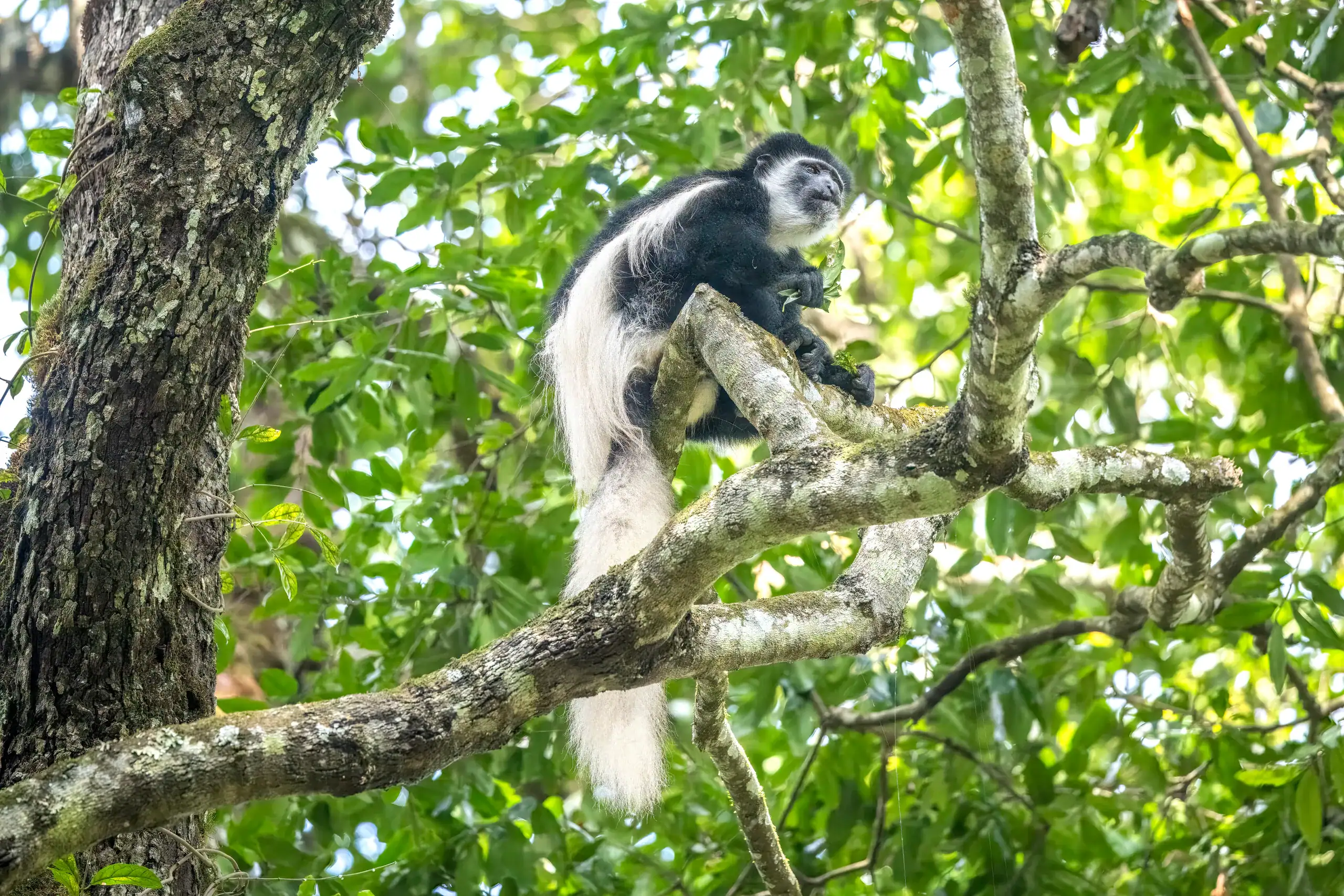
Rainforest
Lush forest on the lower slopes with colobus monkeys and birdlife.
The Roof of Africa
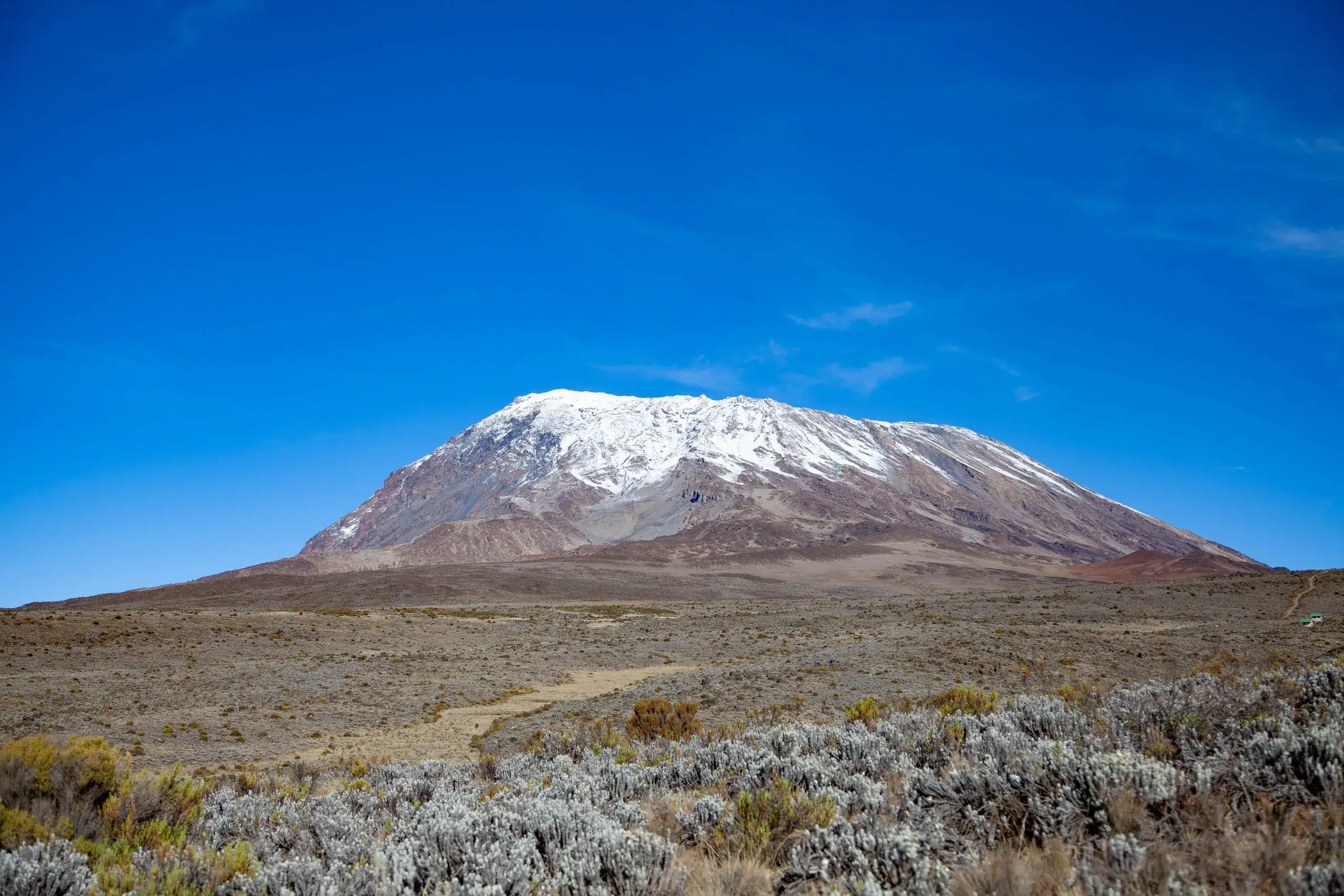
The highest free-standing mountain in the world. A trek to the summit of Kilimanjaro is a journey through five distinct ecosystems and a test of true spirit.
Overview
Climbing Kilimanjaro is a bucket-list achievement. It is a non-technical climb that allows passionate hikers to reach 5,895 meters and stand on the spectacular, glacier-capped roof of the continent.
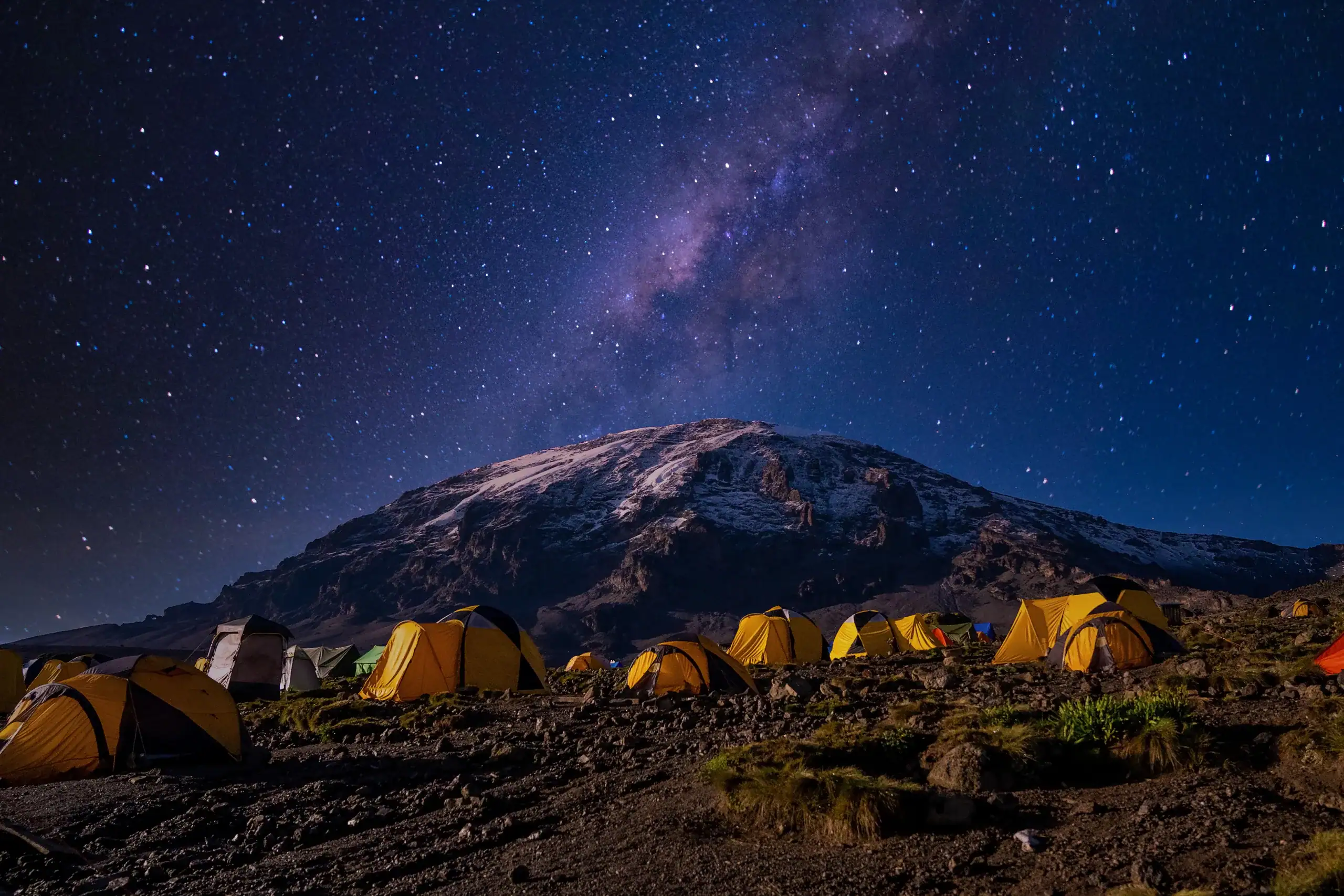
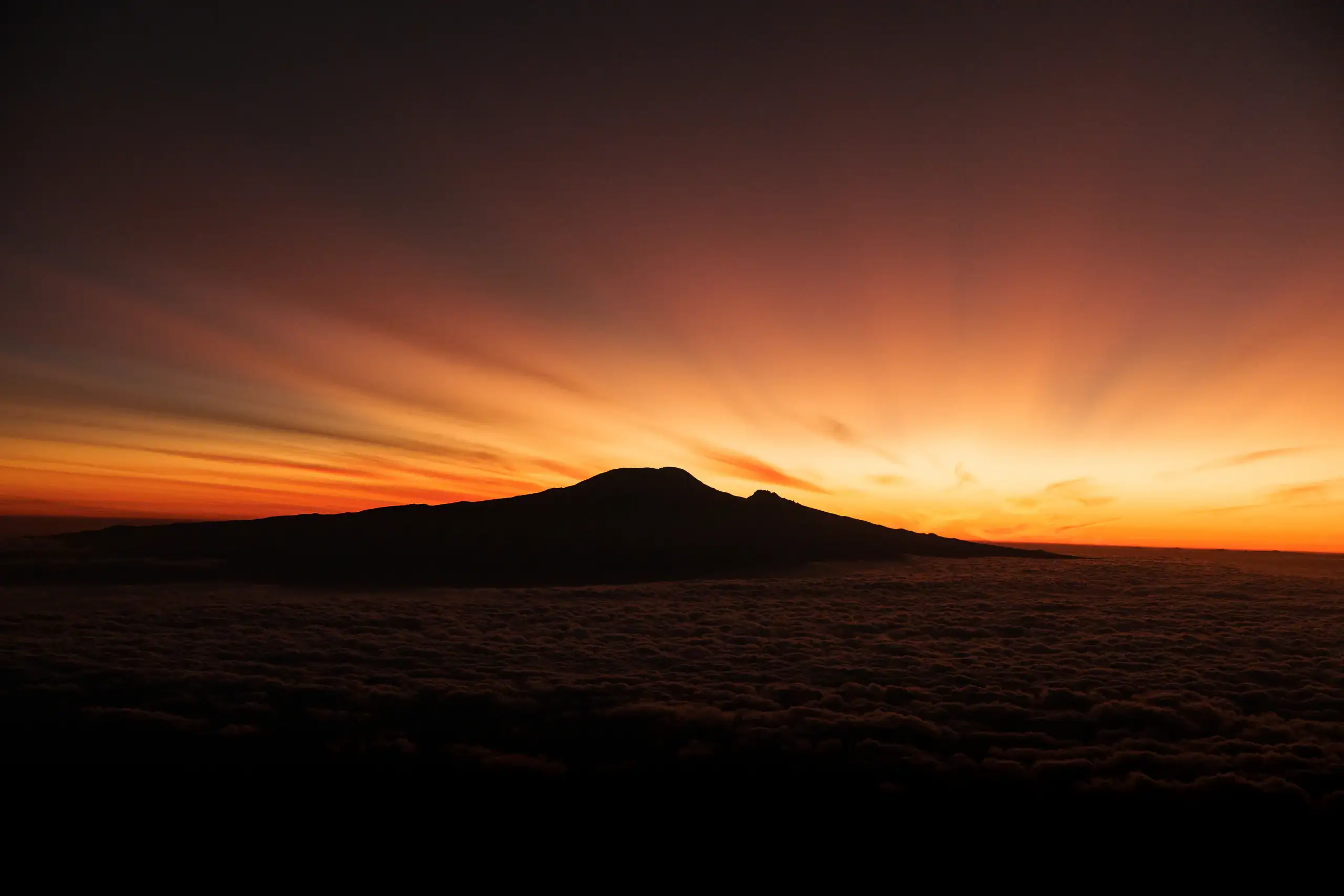
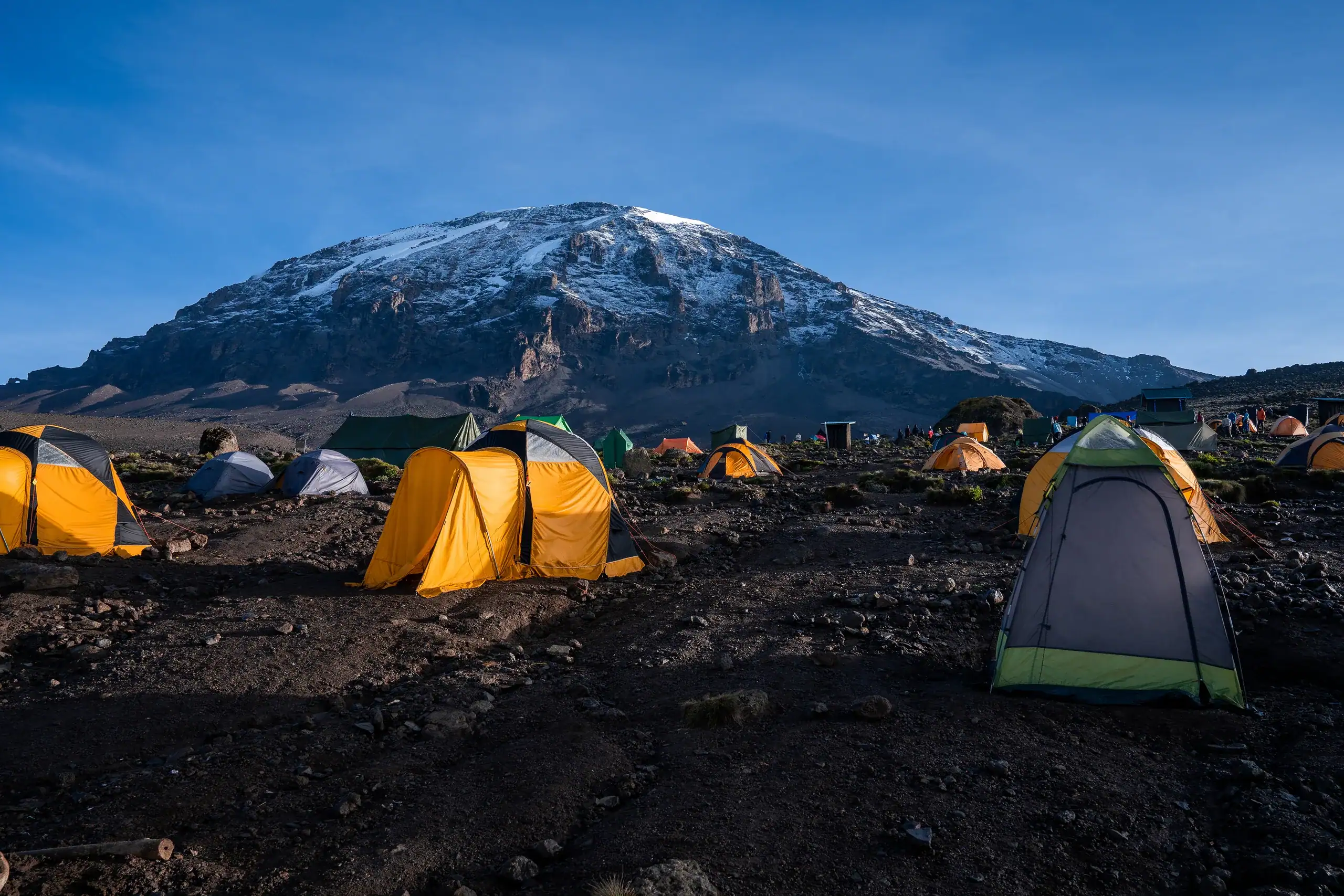
Kilimanjaro is the highest mountain in Africa and the tallest free-standing mountain in the world, rising to 5,895 m at Uhuru Peak on the rim of its Kibo crater. It is a dormant volcano made up of three cones: Kibo, Mawenzi and Shira.
Climbing it needs no technical skills, which makes it one of the world’s great achievable summits. On the way up you pass through five climate zones in a few days: farmland, rainforest, heath and moorland, alpine desert and, finally, the icy summit.
Most climbs take 6–8 days; longer routes give your body more time to adjust to the altitude and have a higher success rate. Kilimanjaro combines naturally with a safari in the northern parks before or after the climb.
Inside the park
Where you stay and explore shapes what you see. These are the main areas we plan around.
Lush forest on the lower slopes with colobus monkeys and birdlife.
Open landscape with giant groundsels and lobelias, and the first big views.
A stark, high-altitude landscape of rock and scree, cold at night.
Glaciers, crater rim and the final push to Uhuru Peak, usually started around midnight.
Wildlife
The mountain is about the climb, not the wildlife, but the forest belt is rich in birds and monkeys.
When to go
January to mid-March and June to October. These months offer the clearest skies and most stable weather for high-altitude trekking.
The most popular climbing window: dry and clear, with cold nights.
Warmer days and quieter trails; a good time to climb.
Wet and muddy; possible on some routes, but with fewer views.
Getting there
About 1.5 hours from Arusha to the Moshi area and the park gates.
Kilimanjaro International Airport (JRO) sits between Arusha and Moshi.
Things to do
Where to stay
We match each stay to your budget and the season, from classic tented camps to luxury lodges.
Tented camps on most routes; huts on the Marangu route.
Comfortable lodges before and after the climb.
It is a physical and spiritual pilgrimage. You'll hike from dense rainforests through alpine deserts, guided by a dedicated support crew. Summit night is an arduous, freezing ascent rewarded by a sunrise over the African plains.
Questions
Combine with
Tell us your dates and interests. A safari designer replies within 24 hours with ideas and prices.